PrairieStone Pest Guard delivers direct, field-verified pest control service in Columbia to stop destructive insect colonies and dangerous rodent infestations before structural damage spreads across your property. Our clinical protocols target the intense humid subtropical climate pressures of Richland County, protecting residential foundations, crawl spaces, and finished living quarters from persistent native pests.

Pest control service in Columbia is a systematic biological mitigation process that establishes exterior chemical barriers, eliminates active structural colonies, and seals entry points against local insect and rodent populations.
Every service reflects the same meticulous attention to detail, whether it's a single job or a larger pest control service project across columbia.
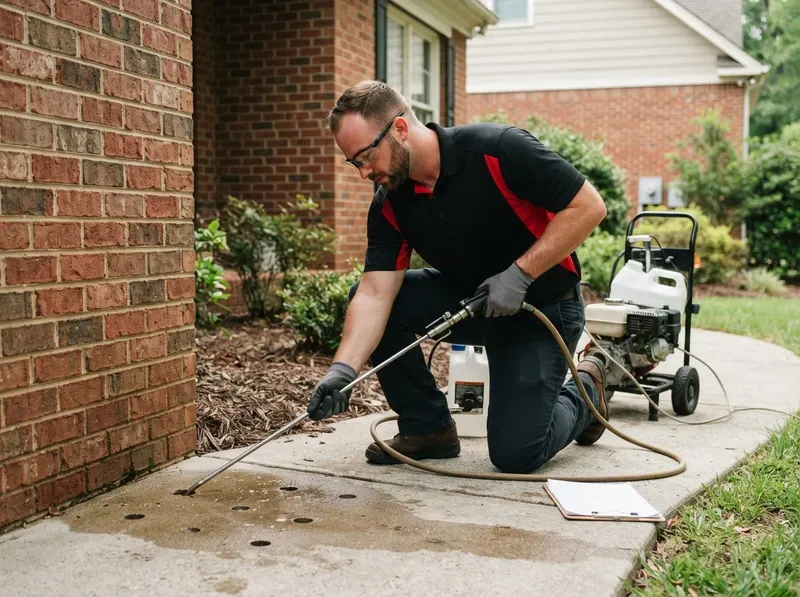
Subterranean termite remediation halts structural wood destruction through deep liquid soil trenching, non-repellent termiticide barriers, and crawl space wood-member saturation adhering to Clemson University Department of Pesticide Regulation standards. Technicians trench continuous channels around foundation footings, drill hollow-block masonry piers, and install targeted bait monitors to intercept subterranean colonies moving through dense red clay. Every application follows precise liquid volume formulas calibrated to soil density, applying 4 gallons of finished dilution per 10 linear feet per foot of depth to prevent subterranean access to structural sill plates, subflooring, and framing members.
Get a quote →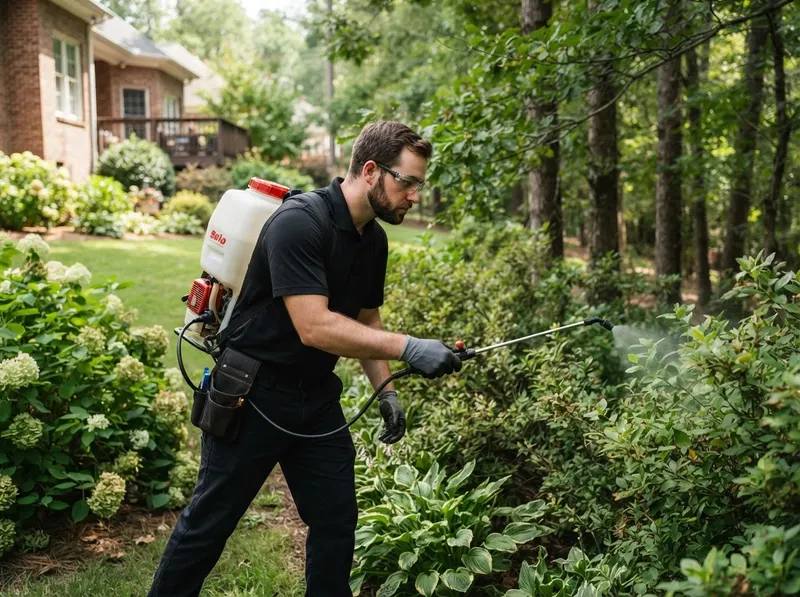
Mosquito defense disrupts biting insect life cycles using high-pressure mist blowers that apply micro-encapsulated adulticides and insect growth regulators directly to the undersides of broadleaf foliage. Following guidelines established by the Centers for Disease Control and Prevention , field crews systematically target shaded resting sites, dense ground-cover vegetation, ornamental shrub beds, and perimeter fence lines. Recurring applications every 21 to 28 days eliminate breeding adult populations and prevent larval development in standing moisture, drastically reducing localized vector pressure throughout the humid season.
Get a quote →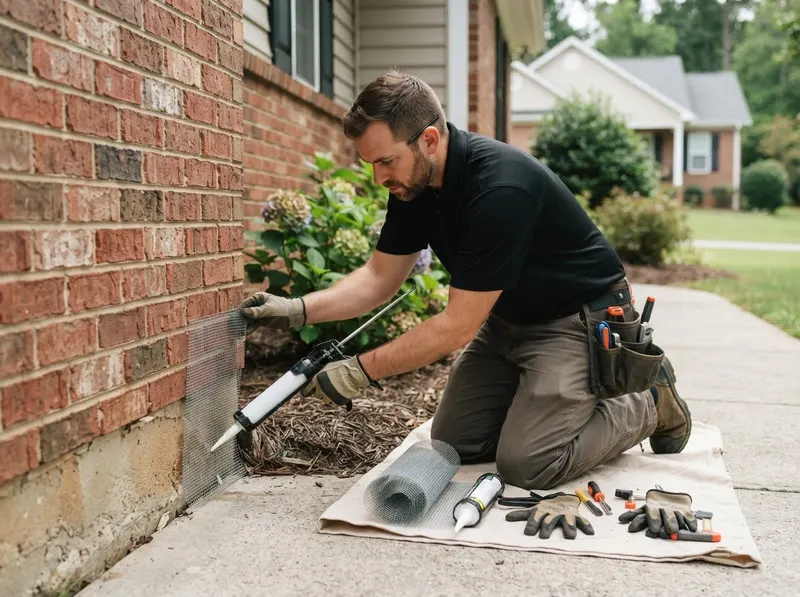
Rodent abatement stops invasive roof rats and house mice from contaminating crawl spaces, attics, pipe chases, and internal wall cavities. PrairieStone Pest Guard conducts heavy mechanical exclusions using 1/4-inch heavy galvanized hardware cloth, rust-proof copper mesh, and elastomeric structural sealants on vulnerable roof returns, foundation crawl space vents, and utility conduit wall penetrations per EPA Integrated Pest Management criteria. Strategic interior trapping lines immediately capture enclosed pests without introducing secondary toxicity hazards to indoor domestic air or pets.
Get a quote →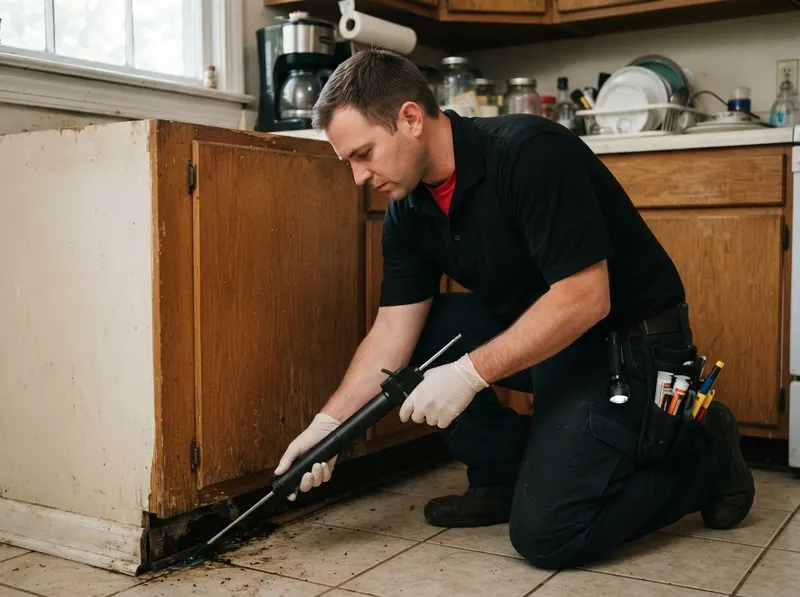
Targeted cockroach control resolves heavy indoor infestations of German, American, and smokybrown cockroaches within commercial facilities and residential structures. Technicians inject low-toxicity gel baits and micro-fine mineral dust formulations into hidden plumbing penetrations, sub-cabinet voids, motor housings, and hollow wall spaces, adhering strictly to the safety standards of the National Pest Management Association . Non-repellent active ingredients prevent colony scattering throughout interior sheetrock while insect growth regulators interrupt the reproductive cycle by suppressing egg-case maturation.
Get a quote →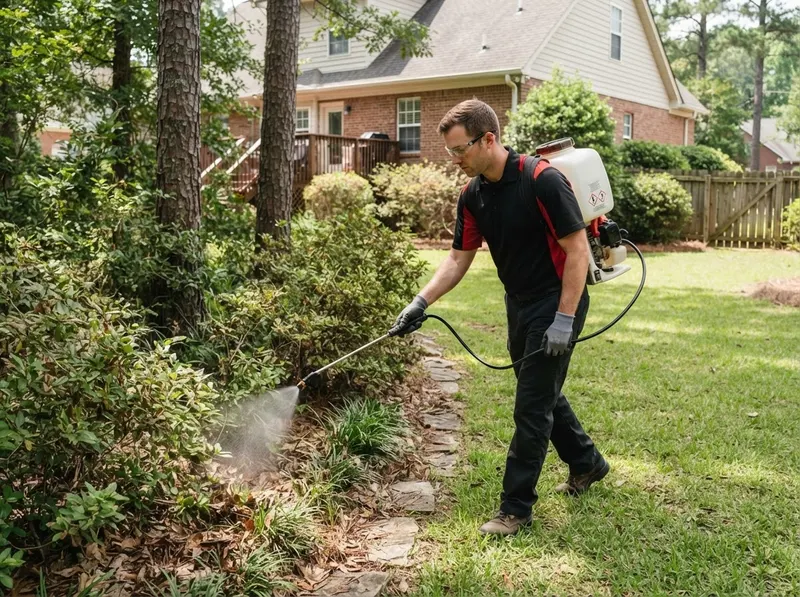
Tick suppression protocols establish defensive perimeters along transitional woodland edges, turf zones, leaf litter margins, and ornamental pine straw beds where parasites wait for passing hosts. Formulated in accordance with the South Carolina Department of Public Health vector management guidelines, these treatments utilize targeted synthetic acaricides to eliminate blacklegged deer ticks and lone star ticks upon contact. Applications significantly reduce vector-borne pathogen exposure across residential yards, perimeter recreation areas, and outdoor pet runs.
Get a quote →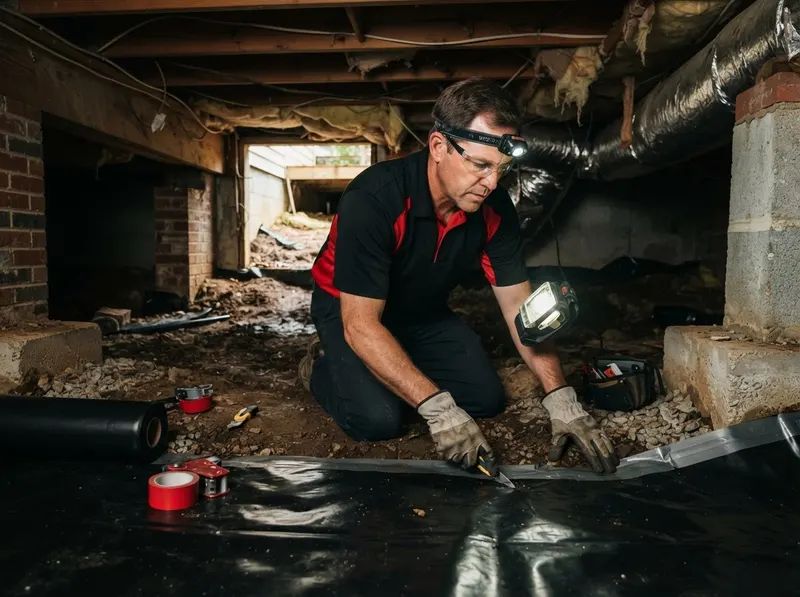
Moisture-driven crawl space treatments combat wood-destroying fungi, silverfish, subterranean termites, and moisture-loving wood-boring insects beneath historical and modern crawl spaces. Technicians lay down heavy 10-mil to 20-mil polyethylene soil vapor barriers, apply systemic disodium octaborate tetrahydrate wood treatments to structural floor joists, and correct crawl space foundation vent blockages aligned with the U.S. Department of Energy building envelope best practices. Controlling ground moisture eliminates the biological conditions required for insect survival.
Get a quote →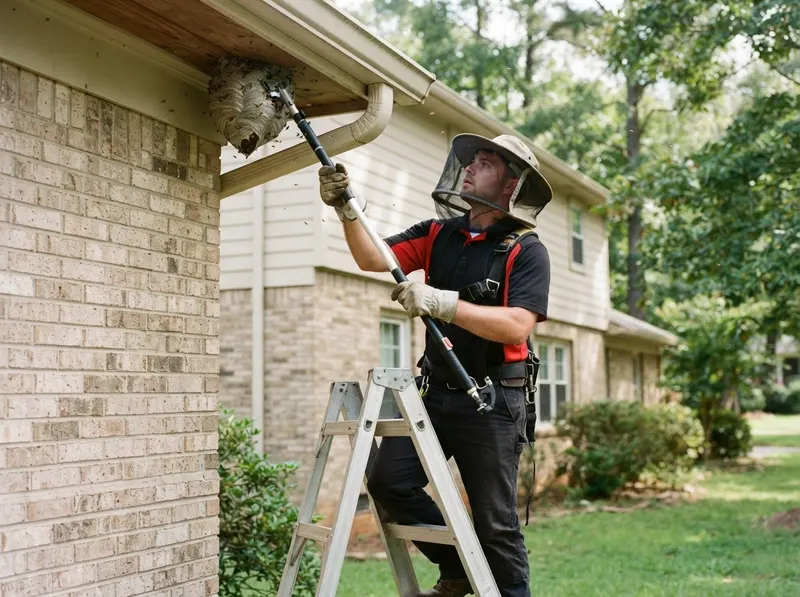
Stinging insect remediation safely neutralizes paper wasp, hornet, and yellowjacket colonies situated beneath soffits, structural porch ceilings, fascia boards, and landscape timbers. Certified applicators apply targeted knockdown aerosols and residual dusts into exterior wall voids, exterior attic vents, and subterranean nests, maintaining compliance with OSHA respiratory and workplace safety protocols. Protective physical removal clears nests entirely, eliminating aggressive stinging threats from active human pathways and primary building entry doors.
Get a quote →Perimeter home pest defense creates a continuous multi-layered chemical and physical barrier extending 3 feet up the exterior masonry foundation and 6 feet outward across surrounding soil beds. Applying broad-spectrum residual insecticides alongside water-resistant granular perimeter barriers repels invading fire ants, centipedes, earwigs, crickets, and spiders under South Carolina Code of Regulations pesticide rules. Regularly scheduled quarterly applications stop seasonal ground-level insect incursions before pests breach exterior door thresholds or foundation vents.
Get a quote →You get a firm, itemized quote for your pest control service before any work begins, no surprises, no pressure.
Careful prep, tidy work, and a full cleanup when we are done. We treat your home and belongings like our own.
The same trusted, background-checked team from the first call to the final check.
Deciding on an extermination strategy requires balancing active chemical knockdown speed against long-term environmental persistence across varied structural construction styles. If your property displays active wood damage, mud shelter tubes, or interior frass, choose liquid termiticide soil trenches or targeted borate wood treatments rather than surface repellent sprays. Liquid soil applications establish an uninterrupted non-repellent lethal zone that foraging subterranean colonies transfer throughout their subterranean nest, whereas surface repellent sprays merely deflect insects into untreated structural voids.
If you face severe indoor cockroach or ant infestations, choose targeted baiting matrices alongside non-repellent insect growth regulators instead of generic pyrethroid foggers. Bait matrices exploit social feeding behaviors to eradicate the harborage hub, while consumer foggers disperse populations behind sheetrock, compounding the structural infestation. For outdoor biting insects, choosing automated barrier misting or micro-encapsulated foliage applications provides continuous suppression throughout humid summer cycles, whereas single-event treatments provide only temporary relief lasting less than 72 hours.
The trade-off between botanical eco-friendly treatments and synthetic micro-encapsulated formulations centers on durability versus environmental profile: botanical essential oil compounds degrade within 14 to 21 days under direct sunlight and high rainfall, requiring shorter application intervals, whereas synthetic pyrethroids bound with UV-inhibitors resist Midlands summer heat and maintain protective integrity for 60 to 90 days. When choosing between localized spot treatments and full perimeter soil trenching, spot applications solve acute localized breaches at lower upfront cost but leave secondary foundation access points unprotected, whereas continuous perimeter barriers guarantee contiguous defensive coverage along all load-bearing footings. For ongoing exterior safety, homeowners can secure a $25 off promotional discount on scheduled seasonal defense plans.
Every project gets a firm, written price after a free on-site visit. Ranges below for orientation.
Tell us about your pest control service job and we'll send a clear, written quote, usually the same day. Or just call and talk to a real columbia pro.
(803) 887-7915
Columbia's geographic positioning along the fall line, where the Broad and Saluda rivers converge to form the Congaree River, generates a dense subtropical microclimate marked by sustained summer heat and elevated ground moisture. High ambient humidity, combined with extensive alluvial soil banks and historic hardwood canopies near Riverbanks Zoo and Garden, the Columbia Canal and Riverfront Park, and the University of South Carolina Horseshoe, accelerates subterranean termite activity and mosquito reproduction across Richland County. Furthermore, the historic crawl space architecture prevalent in older neighborhoods like Shandon, Cottontown, Elmwood Park, and Melrose Heights features exposed sandy-clay soil floors that trap subterranean moisture against aging heart-pine floor joists. These unconditioned structural subfloors sit directly over high water tables, creating persistent biological pressure from wood-destroying beetles, palmetto bugs, and subterranean termite colonies. Modern slab homes in suburban zones like Forest Acres and Lake Katherine experience distinct structural vulnerabilities, where shifting clay soils cause microscopic settling cracks along foundation edges and utility pipes, granting subterranean pests direct access to wall framing. Managing these threats across the Midlands requires localized perimeter defense strategies tailored to specific regional soil compositions, local river basin ecology, and neighborhood structural framing profiles rather than generic interior spray treatments.
Free estimates for columbia & the surrounding area.
 PrairieStone Pest Guard