Midlands geological profiles combine heavy clay soils with extended relative humidity exceeding 75%, creating extreme biological pressure from crawling insects around residential structures. In historic Richland County…
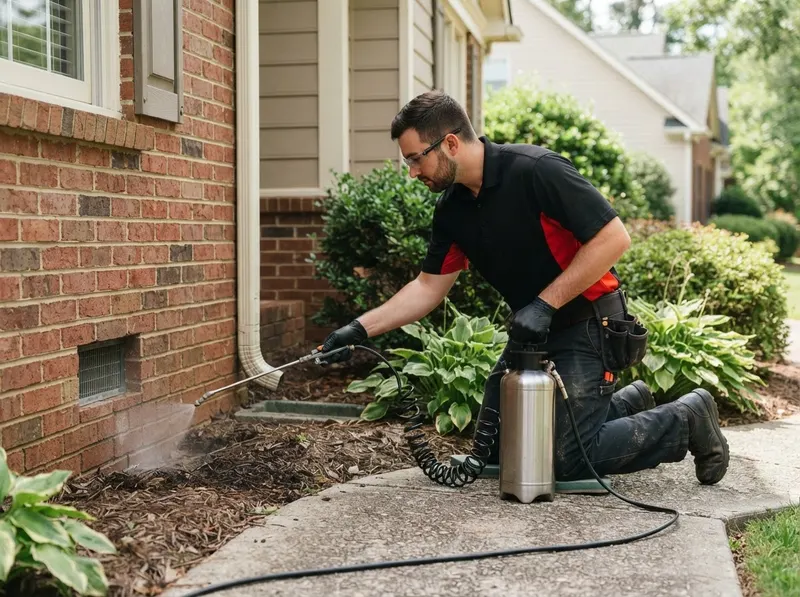
Midlands geological profiles combine heavy clay soils with extended relative humidity exceeding 75%, creating extreme biological pressure from crawling insects around residential structures. In historic Richland County neighborhoods like Shandon, Old Shandon, and Cottontown, continuous brick foundations and crawl space ground vents frequently serve as primary moisture highways. Perimeter home pest defense focuses decisive chemical and micro-encapsulated treatments along the immediate building footprint rather than applying interior baseboard sprays. Technical guidance provided by the Clemson University Home and Garden Information Center emphasizes that stopping subterranean pests before they cross the exterior threshold eliminates indoor food contamination risks. Technicians map structural entry points, applying micro-encapsulated synthetic pyrethroids along foundation brick, mortar joints, and under siding aprons. This targeted treatment adheres to exterior surfaces regardless of the severe downpours common near the Congaree basin.
Properties located in Earlewood, Elmwood Park, and Melrose Heights often feature mature tree canopies and pine straw mulch beds that preserve ground-level moisture throughout the summer. These conditions support high-density colonies of Argentine ants and smokybrown cockroaches. While interior pest control addresses insects that have already invaded living quarters, perimeter defense creates an unbroken line of lethal residual material that eliminates pests during nocturnal foraging runs. Standards outlined by the EPA Office of Pesticide Programs govern the precision application of these non-repellent transfer insecticides. Foraging workers encounter the invisible residue and carry active ingredients back into sub-surface satellite nests beneath patios and foundation footings. In lakeside and riparian microclimates like Lake Katherine and Forest Acres, perimeter defense establishes a strict 10-foot band using water-insoluble granules that will not break down in saturated topsoil.
Structural design elements in Heathwood and Rosewood often dictate specific tactical adjustments between physical exclusion and chemical bands. Slab-on-grade homes require exterior expansion joint injections, whereas homes on crawl spaces demand perimeter stem-wall saturations and vent screen seals. Regulatory guidelines established by the Department of Pesticide Regulation at Clemson define appropriate exterior buffer zones to safeguard local waterways and non-target organisms. Exterior defense minimizes chemical exposure inside living spaces, limiting internal treatments strictly to targeted pipe-chase injections when active trails emerge. A continuous, seasonal barrier prevents the annual fall migration of wood-infesting and moisture-seeking pests driven inward as temperatures drop across the Midlands.
Every job gets a firm, written price after a free on-site visit.
Tell us about your perimeter home pest defense job in columbia and we'll send a clear, written quote, usually the same day.
 PrairieStone Pest Guard