Midlands subterranean conditions present specific challenges for red imported fire ant eradication due to the acidic sandy loam soil documented by the USDA Natural Resources Conservation Service across Richland County.…
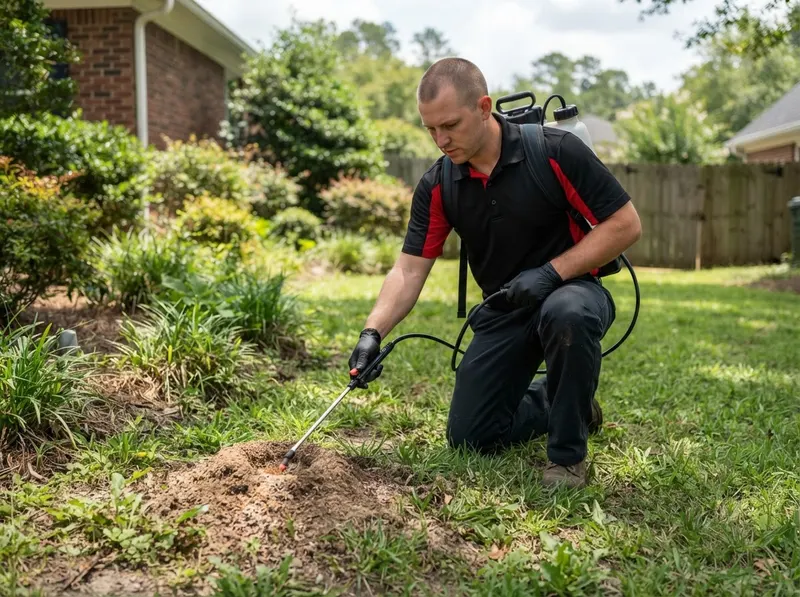
Midlands subterranean conditions present specific challenges for red imported fire ant eradication due to the acidic sandy loam soil documented by the USDA Natural Resources Conservation Service across Richland County. In established communities like Shandon, Heathwood, and Elmwood Park, root-dense soil beneath mature water oaks allows Solenopsis invicta to construct multi-queen (polygyne) colonies that extend six feet underground. Surface disruption or hardware-store chemical dusts merely cause the workers to relocate the brood laterally, creating multiple satellite nests along brick pathways or foundation footings. Effective perimeter suppression relies on the biological distribution mechanisms defined by the Clemson University Cooperative Extension Service, combining direct mound saturation with foraging-worker bait dispersal. PrairieStone Pest Guard implements this dual-action strategy to ensure worker ants carry methoprene or hydramethylnon directly to the reproductive queen rather than just eliminating surface foragers.
Residential yards in Rosewood, Cottontown, and Melrose Heights require precise application scheduling linked directly to regional soil temperatures. Field data from the USDA Agricultural Research Service indicates that foraging workers emerge only when topsoil temperatures sit between 70°F and 90°F. Applying chemical products outside this threshold wastes active ingredients, as underground colonies seal their entrance tunnels against Midlands summer surface heat or sudden cold snaps. To maximize chemical integrity, technicians apply treatments when ambient weather forecasts from the National Weather Service show 24 to 48 hours of dry weather, preventing stormwater runoff into municipal watersheds monitored by the South Carolina Department of Health and Environmental Control. All applied materials strictly comply with labeling mandates from the EPA Office of Pesticide Programs, ensuring non-target safety for birds and domestic pets once the targeted applications have dried.
Properties bordering natural water corridors, such as the drainage basins near Lake Katherine or the low-lying zones along the Columbia Canal and Riverfront Park, require specialized conservation considerations. Treatment protocols must adhere to the regional water-protection measures governed by the South Carolina Department of Natural Resources to safeguard urban drainage ways from chemical drift. Large turf acreage throughout Forest Acres or historic home sites in Earlewood and Old Shandon often present severe structural and human health risks. Fire ant venom contains solenopsin alkaloids monitored by the National Institute for Occupational Safety and Health, presenting serious sting hazards for pets, children, and landscaping contractors. Technicians establish continuous defensive chemical bands that conform to commercial pesticide standards established by the Clemson Department of Pesticide Regulation, driving active colonies outward and stopping worker foraging lines across exterior turf boundaries. For confirmed bookings or prompt property inspections, property owners can call (803) 887-7915.
Every job gets a firm, written price after a free on-site visit.
Tell us about your fire ant mound suppression job in columbia and we'll send a clear, written quote, usually the same day.
 PrairieStone Pest Guard