Subterranean termite treatment in Columbia requires active barrier defense adapted to high-moisture Midlands river basin soils. The eastern subterranean termite ( Reticulitermes flavipes ) builds mud shelter tubes…
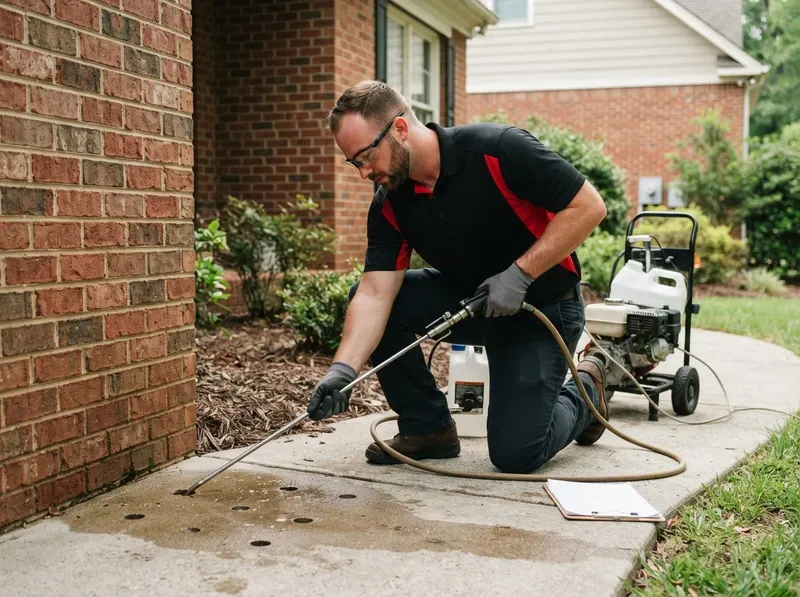
Subterranean termite treatment in Columbia requires active barrier defense adapted to high-moisture Midlands river basin soils. The eastern subterranean termite (Reticulitermes flavipes) builds mud shelter tubes upward from clay soil to access floor joists, sills, and subfloors. Homes built on crawlspace foundations in historic Shandon, Earlewood, and Elmwood Park frequently encounter moisture wicking along brick foundation piers, establishing direct subterranean pathways into heart pine timbers. Slab foundations common in Rosewood and Forest Acres require liquid termiticide placement beneath adjoining patio slabs, porches, and expansion joints where settling opens hairline foundation cracks.
Effective defense relies on non-repellent liquid termiticides containing fipronil applied in compliance with the Clemson University Department of Pesticide Regulation, South Carolina's structural pest licensing agency. Workers do not detect non-repellent chemistry, walking directly through the treated soil matrix and transferring active ingredients to nestmates via grooming and trophallaxis. For homes situated near open water in Lake Katherine or along drainage basins near the Columbia Parks and Recreation canal network, high water tables may dictate structural baiting stations containing noviflumuron or hexaflumuron as regulated by the National Pesticide Information Center. These bait stations arrest the termite molting cycle, causing entire colony suppression without leaching active liquid product into the water table.
Structural protection balances initial installation labor against long-term maintenance needs. A continuous liquid trench establishes an immediate lethal perimeter boundary lasting 5 to 10 years, whereas monitoring bait systems require scheduled seasonal checking every 60 to 90 days as recommended by the National Pest Management Association. If structural moisture issues exist due to inadequate crawlspace ventilation or poor grade slope, pairing chemical intervention with moisture diversion reduces fungal decay recognized by the USDA Forest Products Laboratory. Homeowners in Old Shandon, Melrose Heights, and Heathwood with historic additions must ensure attached carports and poured terraces are drilled every 12 inches to prevent unmonitored soil corridors beneath the foundation floor.
Every job gets a firm, written price after a free on-site visit.
Tell us about your subterranean termite treatment job in columbia and we'll send a clear, written quote, usually the same day.
 PrairieStone Pest Guard